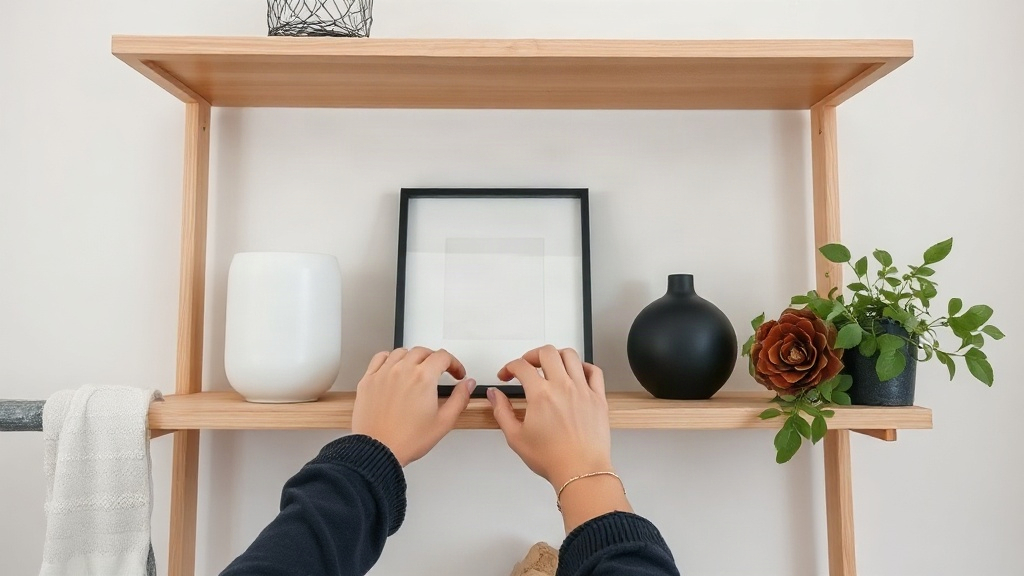
A bare floating shelf can look unfinished, while a crowded one looks chaotic. Learning how to style a minimalist shelf starts with one insight: every object needs a reason to be there. The goal is calm, not empty space.
Quick answer: Choose a shelf color that matches your wall, pick three to five objects in two or three materials, and arrange them in uneven groups with generous gaps. Keep about half of each shelf surface empty. What matters most is restraint: fewer pieces, consistent tones, and one clear focal point per shelf.
This guide gives you a tool list, eight steps, and hard-earned tips on spacing, mistakes, and the questions people ask most before they start.
What you need before starting
Minimalist styling rewards preparation, because every object you place should be a deliberate choice. Gather your supplies and set a few ground rules before you touch the shelf.
Objects to gather
- A shelf itself. Decide its function first: a display shelf, a book shelf, or a working shelf for keys and mail. Each type changes how much free space you keep.
- Three to five anchor pieces. These are your larger items: a framed print, a ceramic vase, a stack of books, a small plant, or a sculptural bowl.
- A handful of small accents. A candle, a single stone, a small clock, or a tiny dish. These are optional and should support the anchors, not compete with them.
- Something with height. Vertical pieces break up flat lines. A tall vase or standing frame works well.
Tools and materials
- A measuring tape
- Painter’s tape (for marking spacing on the wall or shelf)
- A level (if you plan to add or adjust hardware)
- A soft cloth and a small brush or duster
- A tray or box to hold pieces you remove
A simple color and texture rule
Stick to two or three materials across the whole shelf. Ceramic, wood, and matte metal, for example, read as a set. Two or three colors, all in muted or neutral tones, keep the eye relaxed. Brights work best as one single accent.
A quick rule: if removing an item makes the shelf look better, it was never needed.
Step-by-step instructions
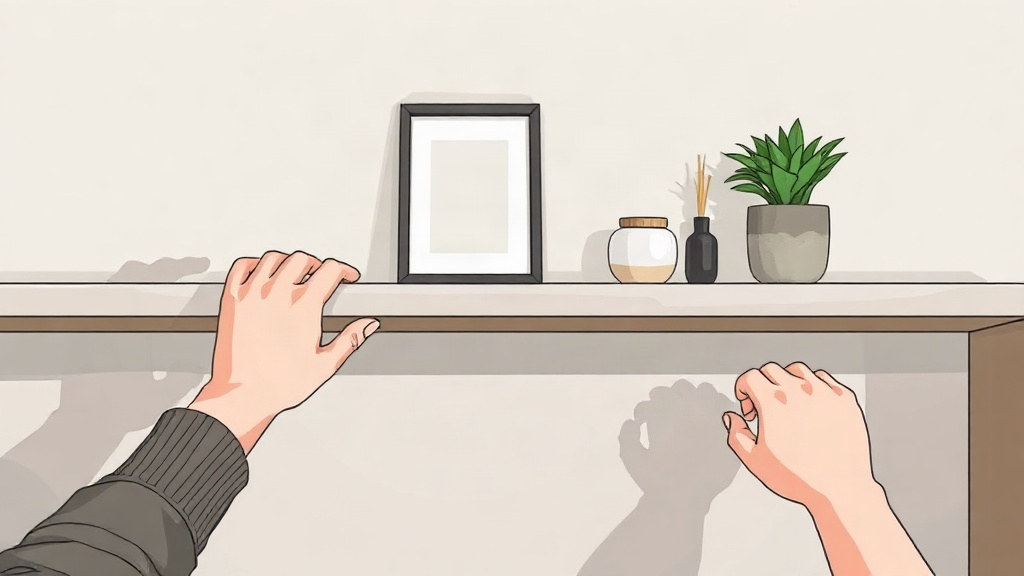
Follow these eight steps in order. Each one ends with a clear state you can check before moving on.
- Clear the shelf completely. Remove every object and wipe the surface. You now have a blank canvas and a pile of candidates to filter.
- Group your objects by size. Place large anchors in one pile, medium pieces in another, and small accents in a third. This stops you from accidentally filling the shelf with only small items.
- Choose your focal point. Pick the one object that earns the center of the shelf, or the spot your eye lands first. A single artwork or a large vase works well. You now have an anchor to build around.
- Place anchors first, with wide gaps. Set your largest pieces on the shelf and leave at least 4 inches (10 cm) between them. Aim to keep roughly half of the shelf surface empty.
- Layer vertically. Lean a framed print against the wall, stack two or three books flat, then set a small object on top. Stacking uses height without adding visible bulk.
- Add one or two small accents. Place a single candle or dish beside an anchor, not between two. A good target is one accent per anchor.
- Check the balance from a distance. Step back a few feet. If one side feels heavy, move a piece rather than adding one. Your shelf should read as even without being symmetrical.
- Photograph it and delete one object. Take a phone photo; flaws show up in a picture. Then remove the weakest piece. The shelf you keep should feel slightly underfilled at first.
Empty shelf surface is a design element, not wasted room. Treat each gap as part of the composition and protect it.
A quick spacing reference
Comparison: crowded shelf vs. minimalist shelf
The table shows where most people land versus the minimalist target for a typical 36-inch (90 cm) shelf.
| Measure | Crowded shelf | Minimalist shelf |
|---|---|---|
| Objects on one shelf | 8–12 | 3–5 |
| Free surface | Under 20% | About 50% |
| Materials | Four or more | Two or three |
Notice that the minimalist version removes quantity, not character. The pieces you keep get more attention, which is the point.
Tips for better results
Small adjustments separate a staged shelf from one that looks like a store display. These ideas work at any budget.
Build in odd numbers
Groups of three or five look more natural than pairs. Odd numbers stop the eye from pairing objects into symmetrical sets, which can feel rigid on a shelf.
Use height and depth, not width
A shelf has three dimensions. Lean a frame back against the wall, let a vase overhang the front edge slightly, and stack books to add layers. Depth makes a shallow shelf look richer without adding clutter.
Choose one accent color and repeat it twice
A muted blue repeated in a book spine and a small bowl ties the shelf together. Limiting the accent to two touches keeps it from becoming a theme.
Keep a rotation box
Store your leftover pieces in a shoebox. Swap two or three items every season rather than buying new ones. This keeps the shelf fresh for free and prevents over-decorating.
Match lighting to the mood
A small warm-toned lamp or a candle adds softness to hard surfaces like ceramic and metal. Check the shelf in both daytime and evening light, since colors shift under different bulbs.
Treat books as architecture
Stack them flat or line them upright, but pick one approach per shelf. Mixed orientations look busy. Group by cover color if you keep several out, and store the rest elsewhere.
Protect hard surfaces
Felt pads under ceramics prevent scratches on wood and glass. Costs are tiny, and they stop small items from sliding when the shelf vibrates.
If you can add a piece without thinking about where it goes, you have room for one more. If you hesitate, stop. That hesitation is your signal.
Common mistakes to avoid
Most minimalist shelves fail for the same handful of reasons. Each fix below is quick and free.
Matching shelf color to your wall
A shelf painted the same color as the wall blends in, so your objects carry the whole design. A contrasting shelf draws attention to the shelf itself, which fights the objects for focus. Paint or buy the shelf in your wall color or one shade darker.
Filling every inch
The instinct to use all available space creates visual noise. Aim for about half the surface left empty. If a shelf holds four objects and two gaps, you are on target.
Using too many small items
Five tiny objects add up to clutter with no visual weight. Balance each small piece with one larger anchor. A single medium vase beats six mini figurines.
Ignoring the scale of the room
Tiny objects on a shelf disappear on a large wall. Match object sizes to the shelf and the room: bigger anchors for bigger shelves.
Centering everything
Symmetry is easy but looks rigid. Offset your focal piece slightly left or right of center, then balance the other side with a lower, wider object.
Skipping the “less is more” test
Before you finish, remove one object and look again. If the shelf still works, leave that object out. Most people can cut one more piece than they expect.
Forgetting the shelf’s job
A shelf that holds keys, mail, and a phone needs free working space. Reserve one clear zone about 10 inches (25 cm) wide for daily items, and style around it.
Check the weight limit of your shelf brackets before loading it with ceramics or stacked books. A heavy anchor piece can pull a shelf from drywall.
Buying decor to fill gaps
Rushing to a store to solve an empty space usually adds clutter. Shop your home first. Move a vase from another room and give it a new role.
FAQ
How much should I expect to spend on a minimalist shelf setup?
You can often style a shelf for very little by using pieces you already own. If you buy new items, budget for one or two anchor pieces rather than a full set. Thrift stores and secondhand shops are excellent for ceramics and frames. Spend more on the shelf itself, since it stays.
How many objects should a single shelf hold?
Aim for three to five pieces on a typical shelf, including one anchor and one or two small accents. Wider shelves can hold slightly more, but keep the same object-to-free-space ratio. The gap between objects matters as much as the objects themselves.
Is a minimalist shelf suitable for a family home with kids?
Yes, with adjustment. Keep fragile anchors above child height, or choose sturdier pieces like books and wooden objects. Reserve the lowest shelf for everyday items kids can reach. Minimalism is about restraint, not fragility.
How long does styling a shelf take?
Most people finish in 30 to 60 minutes once they gather objects and tools. The photograph step and one final edit take about five minutes. You can refine the arrangement over the following week as you notice what feels off.
Can I mix metal, wood, and glass on one shelf?
You can, but limit yourself to two or three materials in total. Too many finishes create visual noise. Keep tones consistent, and let one material dominate so the shelf reads as a set.
Do I need to buy anything to make a shelf look styled?
No. A shelf can look complete with three objects you already own, one clear focal point, and generous gaps. Buying more decor is rarely the answer. Start with what you have, then add only if a gap feels genuinely empty.
Conclusion
A minimalist shelf is built on a few firm rules: two or three materials, three to five objects, about half the surface left open, and one clear focal point. Choose a shelf color that matches your wall, place anchors first with wide gaps, and always delete one piece before you call it done. Empty space is doing real work here, so resist the urge to fill it. Start with a single shelf this weekend, photograph the result, and refine from there. Once that one shelf feels calm, apply the same method to the next surface you see. A small, quiet shelf often changes how a whole room feels, and that is a result worth chasing one shelf at a time.