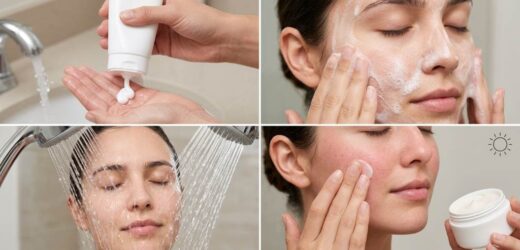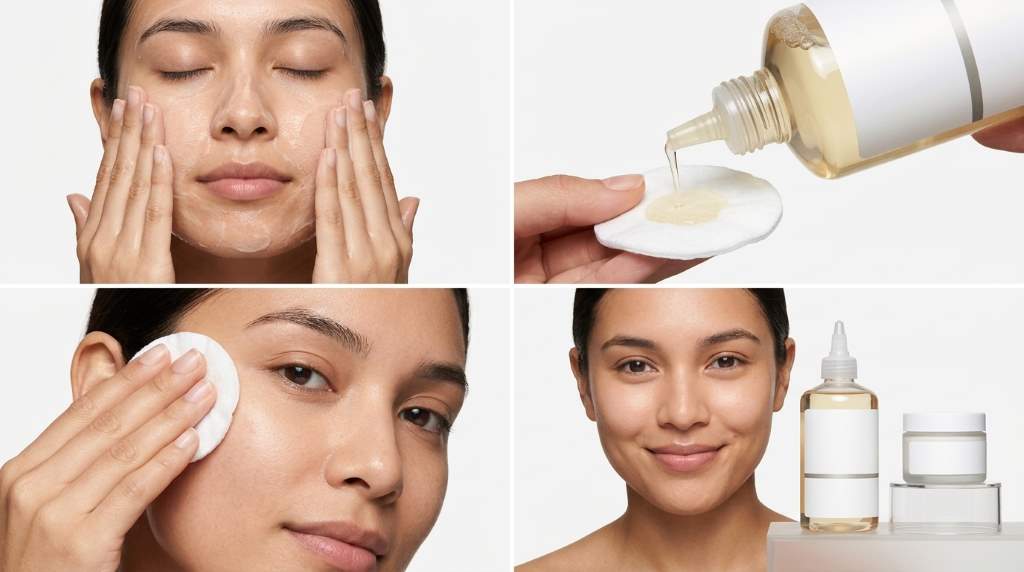
Use glycolic acid toner at night on clean, completely dry skin, starting one or two times weekly. Follow with a gentle moisturizer, then apply broad-spectrum sunscreen every morning because AHAs can increase UV sensitivity.
Glycolic acid remains popular because it exfoliates the skin surface while improving the appearance of texture and tone. FDA-reviewed studies found that four weeks of AHA use increased UV-related skin redness sensitivity by 18%, making sun protection essential. A well-formulated Glycolic Acid Toner can fit effectively into a clear-skin routine when you control frequency and avoid aggressive product combinations.
Key Takeaways
- Start with one or two nighttime applications weekly.
- Apply toner only after cleansing and drying your skin completely.
- Use moisturizer after every glycolic acid application.
- Avoid combining glycolic acid with strong exfoliating actives initially.
- Wear broad-spectrum sunscreen every morning without exception.
- Reduce usage when persistent burning, redness, peeling, or tightness appears.
Why Glycolic Acid Can Improve Skin Clarity
Glycolic acid belongs to the alpha hydroxy acid family, commonly called AHAs. It loosens connections between surface dead skin cells, encouraging more even shedding and smoother-looking skin.
As dead cells accumulate, they can make skin appear dull, rough, and uneven. Therefore, controlled exfoliation can reveal a fresher-looking surface and improve visible texture. Glycolic acid can also help pores look cleaner by reducing surface buildup.
What It Can Actually Target
- Dull-looking skin and uneven surface texture
- Rough patches caused by accumulated dead cells
- Uneven-looking skin tone and discoloration
- Visible signs of photoaging and fine texture changes
- Surface congestion that contributes to an uneven appearance
However, glycolic acid does not solve every form of acne or pigmentation. Persistent acne, cysts, significant melasma, or stubborn discoloration may require professional assessment and different treatments.
Choose the Right Toner Before You Start
The percentage matters because stronger formulas can create more irritation when your skin lacks tolerance. For beginners, a lower-strength formula provides a more controlled introduction to chemical exfoliation.
Check the complete label rather than choosing a product solely because it advertises a high percentage. FDA-reviewed safety guidance notes that consumer cosmetic use of glycolic and lactic acid has been evaluated at concentrations up to 10% under specified formulation conditions.
Also consider your existing routine before buying anything. If you already use retinoids, exfoliating acids, or acne treatments, adding glycolic acid may create unnecessary irritation.
A Simple Nighttime Application Method
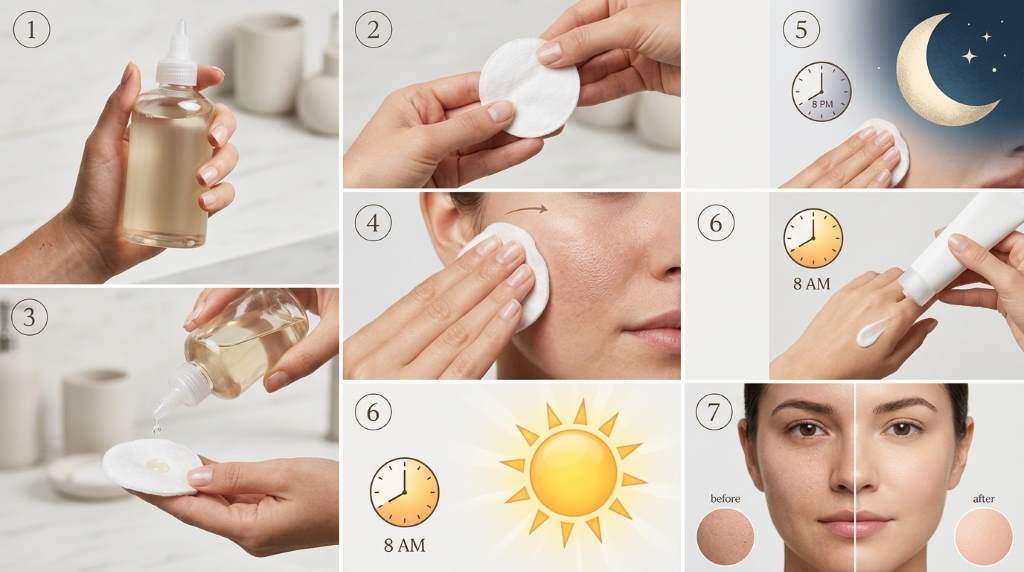
Step 1: Cleanse Without Stripping
Start with a gentle cleanser that removes sunscreen, makeup, oil, and daily debris. Then rinse thoroughly and pat your face dry instead of rubbing it with a towel.
Dry skin gives you better control over the product’s application and reduces unnecessary irritation. Avoid applying glycolic acid immediately after harsh cleansing, scrubbing, or other irritating treatments.
Step 2: Patch Test Before Full Application
Patch testing gives your skin a chance to reveal sensitivity before you treat your entire face. Apply a small amount according to the product’s testing instructions and observe the area for signs of irritation.
Do not proceed if you develop significant redness, swelling, blistering, itching, or persistent burning. Product labels remain the primary guide because formulations differ in strength and ingredients.
Step 3: Apply a Thin, Even Layer
After cleansing, apply a small amount of toner to dry skin using clean fingers or a cotton pad. Gently spread it across the face while avoiding the eye contour, lips, nostrils, and broken skin.
Do not scrub the toner into your face because glycolic acid already provides chemical exfoliation. More product does not mean faster results, but it can increase irritation and dryness.
Step 4: Let the Toner Work
Most leave-on glycolic acid toners should remain on the skin unless their label specifically says otherwise. Give the formula time to settle before applying your next skincare step.
You do not need to chase a strong tingling sensation. Mild sensations can occur, but intense burning signals that your skin may not tolerate the product well.
Step 5: Restore Moisture
Follow glycolic acid with a simple, fragrance-free moisturizer when possible. Ingredients such as ceramides, glycerin, and other humectants can support a comfortable skincare routine.
Moisturizing matters because excessive exfoliation can leave skin feeling tight, dry, or irritated. A comfortable barrier also makes it easier to maintain a consistent routine.
Step 6: Protect Your Skin the Next Morning
Apply broad-spectrum sunscreen every morning after using glycolic acid. FDA guidance specifically warns that topical AHAs can increase sensitivity to ultraviolet radiation and sunburn.
Use protective clothing and limit unnecessary sun exposure when practical. Consistent sun protection also helps prevent new discoloration from undermining your skincare progress.
How Often Should You Use Glycolic Acid Toner?
Start conservatively instead of following the maximum frequency printed on another person’s routine. Use your toner once or twice during the first week, then increase gradually if your skin remains comfortable.
| Experience Level | Suggested Starting Frequency | What To Watch |
|---|---|---|
| Beginner | 1 to 2 nights weekly | Stinging, redness, dryness |
| Building tolerance | 2 to 3 nights weekly | Persistent sensitivity |
| Experienced user | Follow product directions | Barrier comfort and irritation |
| Sensitive skin | Start once weekly | Any prolonged reaction |
Only increase frequency when your skin stays calm between applications. If irritation develops, step back rather than pushing through it.
What To Use With Glycolic Acid
Ingredients That Usually Complement It
- Gentle cleansers that do not leave skin tight
- Hydrating serums containing humectants
- Barrier-supporting moisturizers
- Daily broad-spectrum sunscreen
A minimalist routine often works better than an aggressive collection of active ingredients. Keep the surrounding products gentle so glycolic acid remains the main exfoliating treatment.
Actives That Need More Care
Do not automatically layer glycolic acid with salicylic acid, other direct acids, or strong retinoids. Combining several potent actives can increase irritation, particularly when your skin has not developed tolerance.
Instead, alternate active nights when your routine requires multiple treatments. For example, glycolic acid can occupy one evening while a retinoid or another exfoliant takes another evening.
When You Should Skip Glycolic Acid
Do not apply glycolic acid to sunburned, peeling, wounded, or visibly compromised skin. Product guidance also advises avoiding use when the skin already shows significant sensitivity.
Pause exfoliation after procedures or treatments that leave the skin vulnerable. Freshly waxed, threaded, or aggressively shaved skin may need recovery before you introduce an acid.
If you experience persistent burning, swelling, blistering, or severe irritation, stop using the product. Seek professional medical advice when symptoms remain significant or fail to improve.
Common Glycolic Acid Mistakes That Delay Clear Skin
- Using it every night immediately: Rapid escalation can overwhelm your skin barrier.
- Applying too much: A thicker layer does not create proportionally better exfoliation.
- Scrubbing afterward: Physical friction adds unnecessary irritation to chemical exfoliation.
- Skipping moisturizer: Dryness can make the routine uncomfortable and inconsistent.
- Ignoring sunscreen: UV exposure can worsen irritation and discoloration.
- Stacking multiple acids: Several exfoliants can create excessive cumulative stress.
- Chasing tingling: Strong sensations do not prove that the product works better.
How To Build a Clear-Skin Routine Around It
A practical evening routine can remain surprisingly short. Cleanse first, apply glycolic acid, moisturize afterward, and stop there while you build tolerance.
On non-glycolic nights, focus on hydration and barrier support instead. This recovery-focused approach gives your skin time between exfoliation sessions and makes irritation easier to identify.
In the morning, cleanse gently if needed, moisturize, and finish with broad-spectrum sunscreen. Keep the routine predictable so you can identify which product helps or harms your skin.
How Long Does Glycolic Acid Take To Work?
Do not judge your routine after one application because exfoliation produces cumulative changes. Early improvements may appear as smoother texture, while uneven tone and discoloration generally require more consistent care.
Track your skin over several weeks under similar lighting conditions. If your skin becomes increasingly irritated rather than progressively smoother, reduce frequency instead of assuming you need more product.
Glycolic Acid Toner vs. Physical Scrubs
Physical scrubs rely on friction to remove surface material, while glycolic acid chemically loosens connections between dead skin cells. That difference makes technique especially important with chemical exfoliation.
Glycolic acid does not require aggressive rubbing to perform its intended function. Therefore, replacing harsh scrubbing with controlled chemical exfoliation may create a more manageable routine for some users.
A Smarter Way To Personalize Your Routine
Start with your skin condition rather than copying an influencer’s schedule. Someone with resilient skin may tolerate more frequent use, while someone with sensitivity may need substantially less.
Track three signals after every application: comfort, dryness, and visible redness. If all three remain stable, continue gradually; if they worsen, reduce frequency and simplify your routine.
Also remember that clear skin depends on more than exfoliation. Cleansing, moisturization, sun protection, sleep, product compatibility, and appropriate acne treatment can all influence your results.
Frequently Asked Questions
Can I use glycolic acid toner every day?
Some products permit daily use, but beginners should start less frequently and increase only when their skin tolerates it.
Should I use glycolic acid toner in the morning?
Nighttime use simplifies sun protection because AHAs can increase UV sensitivity during and after use.
Can glycolic acid toner remove acne?
It can improve surface congestion and texture, but persistent acne may require targeted treatment from a dermatologist.
Can I use glycolic acid with retinol?
Yes, but alternating them on different nights can reduce irritation compared with layering both initially.
What should I apply after glycolic acid toner?
Apply a gentle hydrating moisturizer, then prioritize broad-spectrum sunscreen the following morning.
Final Thoughts
Glycolic acid toner can become a useful clear-skin tool when you treat it as an active treatment, not an ordinary toner. Start slowly, apply it correctly, moisturize consistently, and protect your skin from UV exposure.
Most importantly, resist the temptation to accelerate results by increasing strength or frequency too quickly. Build a routine your skin can tolerate consistently, and consult a dermatologist when persistent acne, pigmentation, or irritation needs professional treatment.
Review your current routine today, remove unnecessary exfoliating combinations, and introduce glycolic acid gradually. Your best results will come from consistent, controlled use rather than aggressive application.