Cleaning curtains becomes easy when you match the method to the fabric and care label. Start by vacuuming loose dust, then choose machine washing, hand washing, spot cleaning, or professional cleaning. Well-maintained Living Room Curtains can stay fresh and attractive with surprisingly little effort. A practical routine includes surface cleaning every two weeks and deeper cleaning every three to six months. Homes with pets, smokers, or heavy dust may need more frequent attention. Most importantly, never wash expensive or delicate curtains without checking their care instructions first.
Key Takeaways
- Always check the curtain care label before choosing a cleaning method.
- Vacuum curtains before washing to remove loose dust, hair, and debris.
- Use cold water and mild detergent for approved machine-washable fabrics.
- Hand wash delicate curtains when machine agitation could cause damage.
- Never ignore dry-clean-only instructions, especially with lined or coated curtains.
- Air drying often protects curtain shape, color, and fabric better than high heat.
- Regular light cleaning reduces the need for frequent deep washing.

Start by Identifying Your Curtain’s Cleaning Needs
Before reaching for detergent, determine what actually needs cleaning. Surface dust requires a different approach than stains, odors, grease, or deep discoloration.
First, inspect the fabric, lining, seams, pleats, backing, and decorative details. Then check whether the curtains contain hooks, rings, embroidery, beads, or special coatings.
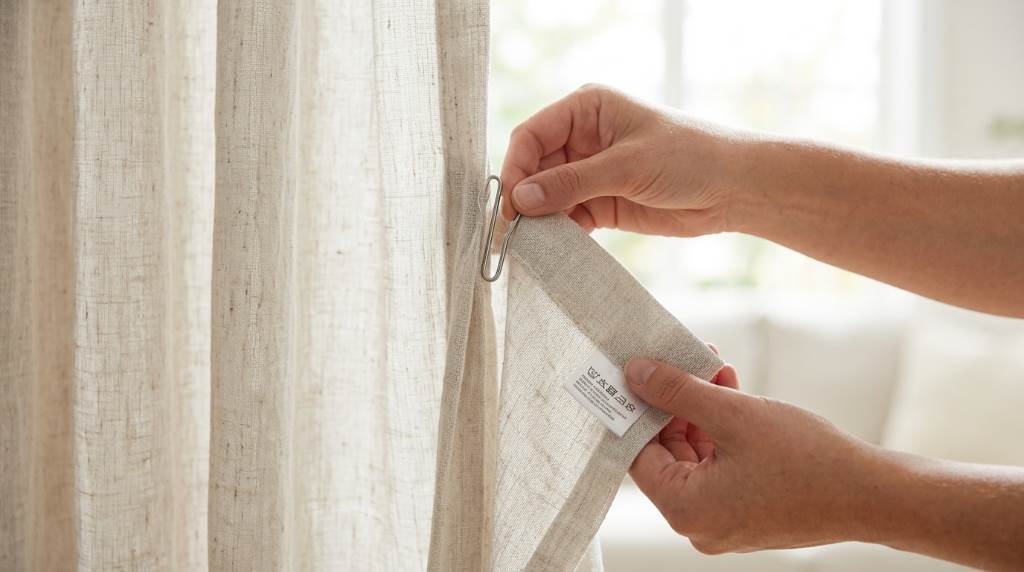
Read the Care Label First
The care label provides the safest starting point for your cleaning routine. It can specify machine washing, hand washing, dry cleaning, low-temperature drying, or spot cleaning.
If the label says dry clean only, follow that instruction instead of experimenting. When the label has disappeared, treat valuable curtains cautiously and test a hidden area first.
Know Which Fabrics Need Extra Care
Cotton and many polyester curtains often tolerate gentle machine washing when their labels permit it. Sheers, lace, silk, velvet, lined drapes, and coated blackout curtains require more careful handling.
For these fabrics, water, heat, friction, or aggressive chemicals can change the texture or shape. Therefore, never assume that every curtain can tolerate the same cleaning process.
Remove Dust Before Using Water
Dry cleaning comes before wet cleaning because loose dust can become harder to remove after soaking. It also prevents your washing machine from handling unnecessary dirt.
Close nearby windows and gently vacuum from the curtain’s top edge toward the bottom. Use an upholstery brush or soft attachment, especially when cleaning lightweight fabric.
Use a Vacuum Without Damaging the Fabric
Keep suction moderate when working across delicate curtains. Move slowly instead of pressing the attachment firmly against the material.
For sheers, support the fabric with one hand while vacuuming with the other. A lint roller can also remove pet hair without saturating the curtain.
Shake Out Heavily Dusty Curtains
If the fabric allows it, take removable curtains outdoors and shake them gently. This step can release trapped dust before you begin washing.
However, avoid aggressive shaking with old, fragile, embroidered, or loosely woven curtains. Excessive movement can stretch seams and weaken aging fibers.
Choose the Right Cleaning Method
The easiest cleaning method depends on the curtain’s material, construction, and condition. Use the least aggressive method that can solve the specific problem.
| Curtain Condition | Recommended Method | Main Precaution |
|---|---|---|
| Light surface dust | Vacuum or lint roll | Use gentle suction |
| Small isolated stain | Spot clean | Test hidden fabric first |
| Washable cotton or polyester | Gentle machine wash | Follow label settings |
| Sheer or delicate fabric | Hand wash | Avoid twisting |
| Dry-clean-only fabric | Professional cleaning | Avoid home washing |
| Heavy blackout or coated lining | Label-approved cleaning | Protect the backing |
How to Machine Wash Suitable Curtains
Machine washing can save time when your curtains specifically permit it. Lightweight cotton, polyester, and some blended fabrics commonly work well with gentle settings.
First, remove detachable hooks, rings, clips, and other hardware. Then close fasteners and inspect seams for loose threads before placing the panels inside the washer.
Follow These Machine-Washing Steps
- Vacuum the curtains thoroughly before washing.
- Remove all detachable hardware and accessories.
- Pre-treat visible stains using a fabric-safe product.
- Place delicate panels inside a mesh laundry bag.
- Select cold water and a gentle or delicate cycle.
- Add a small amount of mild laundry detergent.
- Avoid overcrowding the washer with bulky curtain panels.
- Run an extra rinse if detergent remains visible.
Use less detergent than you might use for heavily soiled clothing. Excess soap can remain inside dense fabric and leave curtains looking dull.
Also, avoid washing curtains with towels, denim, or items containing rough hardware. Those materials can create unnecessary friction and snag delicate fibers.
Hand Wash Delicate Living Room Curtains
Hand washing gives you better control when curtains cannot tolerate machine agitation. This method works particularly well for lightweight sheers and delicate decorative fabrics when their labels allow washing.
Fill a clean bathtub or large basin with cool water. Add a small amount of mild detergent, then mix it thoroughly before placing the curtains inside.
Use Gentle Movement Instead of Scrubbing
Submerge the curtains and gently move them through the water. Concentrate carefully on soiled areas without rubbing the fabric aggressively.
Allow the detergent to loosen dirt rather than forcing stains away through heavy friction. Afterward, rinse with clean water until the water runs clear.
Never Twist Wet Delicate Curtains
Wet fabric becomes heavier and more vulnerable to stretching. Instead of wringing the panels, press excess water out gently.
You can also place the curtain between clean towels and press lightly. Then follow the care label for the safest drying method.
Clean Curtains Without Taking Them Down
You do not always need to remove curtains for routine maintenance. Hanging cleaning works especially well when curtains only contain surface dust, pet hair, or minor localized marks.
Start with a vacuum attachment and work downward across each panel. Then use a clean microfiber cloth for suitable fabrics and carefully treat visible spots.
When Steam Cleaning Makes Sense
Steam can refresh some curtains without a full wash, but fabric compatibility matters. Always check the manufacturer’s instructions before applying heat or moisture.
Keep the steamer moving instead of concentrating heat on one area. Never steam materials that specifically prohibit moisture or high temperatures.
Remove Common Curtain Stains Safely
Stain removal works best when you identify the stain before applying any cleaner. Different substances respond differently, so aggressive treatment can make the problem worse.
- Dust marks: Vacuum first, then spot clean if discoloration remains.
- Food stains: Blot gently and use a fabric-safe detergent solution.
- Pet marks: Remove hair first, then treat the affected area carefully.
- Greasy spots: Blot excess residue before applying an approved cleaner.
- Water marks: Avoid creating larger wet rings through uneven spot treatment.
- Musty odors: Improve ventilation and use the label-approved cleaning method.
Always blot rather than scrub when treating a fresh stain. Scrubbing can push the substance deeper and roughen the surface.
Test Every Spot Treatment First
Choose an inconspicuous section behind a hem or near the back edge. Apply a tiny amount of the cleaning solution and check the fabric after drying.
Look for fading, bleeding, stiffness, texture changes, or water rings. If anything changes, stop using that solution and choose a gentler method.
Handle Blackout and Lined Curtains Carefully
Blackout curtains deserve special attention because their backing can contain coatings that react poorly to heat or agitation. Always follow the specific cleaning instructions provided with the curtains.
Never assume that a machine-washable front fabric makes the entire curtain washable. The lining or backing can require a completely different treatment.
For heavily lined, coated, expensive, or custom-made curtains, professional cleaning often provides the safer option. This approach also reduces the risk of damaging the curtain’s insulating or light-blocking properties.
Dry Curtains Without Creating New Problems
Drying can determine whether freshly cleaned curtains retain their original shape. Excessive heat can cause shrinkage, distortion, fading, or damage to sensitive materials.
When permitted, air drying provides a gentle option for many washable curtains. Hang or lay the panels according to the care label while avoiding excessive direct heat.
Reduce Wrinkles While Curtains Dry
Remove washable curtains promptly after the cycle ends. Smooth seams and pleats with clean hands before hanging them according to their original construction.
If ironing or steaming is allowed, use the lowest suitable temperature. Always protect delicate surfaces and avoid pressing directly onto special coatings.
Clean the Window Area at the Same Time
Fresh curtains can collect dust quickly if the surrounding window area remains dirty. Therefore, clean the rod, sill, frame, nearby blinds, and glass before rehanging the panels.
Vacuum the floor beneath the window after cleaning the curtains. This final step captures debris that falls during vacuuming, washing, or rehanging.
How Often Should You Clean Living Room Curtains?
A useful maintenance routine combines frequent light cleaning with occasional deeper cleaning. Vacuum or dust curtains about every two weeks, then schedule deeper cleaning every three to six months.
However, household conditions should determine the final schedule. Pets, smokers, frequent window opening, construction dust, and heavy foot traffic can increase cleaning needs.
A Simple Curtain Cleaning Schedule
- Every two weeks: Vacuum or dust the curtain surface.
- Monthly: Inspect hems, stains, odors, and visible discoloration.
- Every three to six months: Perform label-approved deep cleaning.
- After spills: Treat suitable stains as soon as possible.
- Seasonally: Inspect hardware, linings, seams, and curtain rods.
This schedule keeps routine maintenance manageable without unnecessarily washing the fabric. Regular light care also helps you notice damage before it becomes expensive.
Common Curtain-Cleaning Mistakes to Avoid
Many curtain problems happen because homeowners use a cleaning method that seems convenient. A gentler approach usually protects the fabric better than aggressive cleaning.
- Do not ignore the care label.
- Do not use bleach unless the label specifically permits it.
- Do not overload the washing machine.
- Do not leave removable metal hardware attached.
- Do not wring delicate curtains.
- Do not use high heat without checking the label.
- Do not scrub stains aggressively.
- Do not mix unknown cleaning chemicals.
Another common mistake involves cleaning only the visible front surface. Dust and debris can accumulate along hems, folds, pleats, linings, and curtain hardware.
Therefore, inspect the entire curtain before deciding that it needs only a quick wipe. A complete inspection helps you choose the simplest effective method.
When Professional Curtain Cleaning Makes More Sense
Home cleaning works well for many washable curtains, but some situations deserve professional attention. Consider professional cleaning when curtains contain delicate materials, complicated linings, valuable embellishments, or stubborn damage.
Professional help also makes sense when the fabric lacks a readable care label. Paying for appropriate cleaning can cost less than replacing curtains damaged by an incorrect washing method.
A Faster Way to Keep Curtains Looking Fresh
You do not need to deep clean curtains every time they look slightly dusty. Instead, build a simple maintenance habit that removes surface debris before it becomes embedded.
Vacuum gently, treat stains quickly, inspect the fabric regularly, and follow the care label. This approach reduces unnecessary washing while keeping your living room curtains cleaner for longer.
Frequently Asked Questions
Can I Put Living Room Curtains in the Washing Machine?
Yes, but only when the care label specifically allows machine washing for that curtain.
How Often Should I Wash Living Room Curtains?
Deep clean them every three to six months, adjusting the schedule for pets, dust, smoke, and household conditions.
Can I Clean Curtains Without Taking Them Down?
Yes, vacuuming, lint rolling, spot cleaning, and approved steaming can refresh some curtains while they remain hanging.
Should I Use Hot Water to Clean Curtains?
No, use the temperature specified by the care label because excessive heat can shrink or damage some fabrics.
How Do I Clean Curtains That Say Dry Clean Only?
Use gentle surface maintenance and professional dry cleaning rather than risking damage through home washing.
Final Thoughts
The easiest way to clean living room curtains is to use the gentlest method that solves the actual problem. Start with vacuuming, check the care label, then choose spot cleaning, hand washing, machine washing, or professional care.
Most importantly, avoid guessing with delicate, lined, coated, or expensive curtains. Start your next cleaning session with a careful inspection, and your curtains can stay fresher, cleaner, and better looking with less effort.