The clang of metal, the bright flare of the arc, and the scent of molten steel – a welding shop is a dynamic environment brimming with skilled craftsmanship. However, alongside the creation and repair, there are inherent risks. Among the essential pieces of Personal Protective Equipment (PPE), the right footwear often stands as the unsung hero, a critical barrier between a welder’s feet and a host of potential hazards. Choosing suitable footwear isn’t just a matter of comfort; it’s a fundamental safety requirement that can prevent debilitating injuries and ensure long-term well-being on the job. This article delves into the crucial aspects of selecting appropriate footwear for the welding shop, ensuring you’re well-equipped from the ground up.
Why Specialized Footwear is Non-Negotiable in Welding
A welding environment is a minefield of potential foot injuries. From flying sparks and globules of molten metal to heavy falling objects, electrical hazards, and slippery surfaces, the dangers are numerous and varied. The intense heat generated during welding can cause severe burns upon contact with unprotected skin. Sparks, often reaching temperatures capable of igniting flammable materials, can easily find their way into unsuitable shoes, leading to painful burns. Dropped tools, heavy metal plates, or components can result in crushing injuries to the feet if proper toe protection isn’t in place. Furthermore, many welding operations involve electrical equipment, creating a risk of electric shock if footwear doesn’t offer adequate insulation. Wet or oily floors, common in many industrial settings, also pose a significant slip-and-fall risk.
The consequences of inadequate footwear can range from minor discomfort to life-altering injuries, including third-degree burns, punctures from sharp metal debris, broken bones, and electrocution. Regulatory bodies like the Occupational Safety and Health Administration (OSHA) in the United States emphasize the employer’s responsibility to ensure that employees use protective footwear when working in areas where there is a danger of foot injuries. While specific regulations may vary by region, the principle remains universal: specialized footwear is a non-negotiable element of a welder’s safety gear.
The Anatomy of a Perfect Welding Boot: Key Features to Look For
Not all safety boots are created equal, especially when it comes to the unique demands of a welding shop. A suitable welding boot is a carefully constructed piece of equipment designed to offer multifaceted protection.
Material Matters: The Case for Leather
When it comes to the upper material of a welding boot, leather is the undisputed champion. Its inherent durability and natural resistance to heat, sparks, and flames make it the ideal first line of defense.
- Full-grain leather is particularly recommended. This top-layer hide is the strongest and most durable type of leather, offering superior protection and longevity. It can withstand the harsh conditions of a welding environment without easily cracking or breaking down.
- Other types of leather, like split leather, can also be used but may not offer the same level of robustness as full-grain.
- Crucially, the stitching of the boot should also be flame-resistant. Materials like Kevlar® are often used for stitching in high-quality welding boots because they won’t melt or degrade when exposed to high temperatures or sparks, maintaining the structural integrity of the boot.
Toe Protection: Steel, Composite, or Alloy?
One of the most critical safety features in any work boot for a hazardous environment is the protective toe cap. In welding, where heavy materials are constantly being handled and moved, this is paramount. Safety toes are generally rated to meet standards like ASTM F2413 in the US, which specifies requirements for impact and compression resistance.
- Steel Toes: These are the traditional choice and offer the maximum protection against impact and compression. They are incredibly strong and can withstand significant force, making them a reliable option for environments with a high risk of falling objects.
- Composite Toes: Made from non-metallic materials like Kevlar®, carbon fiber, or specialized plastics, composite toes are a lighter alternative to steel. A significant advantage for welders is that they do not conduct electricity, offering an added layer of protection against electrical hazards. They also don’t transfer cold or heat as readily as steel, which can be a comfort factor in extreme temperatures. While they meet the same safety standards as steel toes, some argue that steel offers slightly superior protection in extreme impact scenarios.
- Alloy Toes: These are made from lightweight metals like aluminum or titanium. They offer a middle ground, being lighter than steel but often stronger than some composite materials. Like steel, they will conduct electricity and temperature.
The choice between steel, composite, or alloy often comes down to the specific work environment, individual comfort preferences, and any site-specific electrical hazard assessments.
Sole Construction: More Than Just a Bottom Layer
The sole of a welding boot plays multiple critical roles:
- Heat-Resistant Soles: The outsole must be able to withstand high temperatures without melting or degrading. Materials like rubber and specialized synthetic compounds are often used to provide this heat resistance (often labelled HRO for Heat Resistant Outsole). This is vital when working on hot surfaces or when sparks and molten metal accumulate on the floor.
- Puncture-Resistant (PR) Soles: Welding shops often have sharp metal scraps, shavings, or stray wires on the floor. Puncture-resistant soles, typically incorporating a steel or composite plate within the midsole, protect the foot from being pierced by these sharp objects from below.
- Slip-Resistant Outsoles: Oil, grease, water, and smooth metal surfaces can make welding shop floors treacherous. A good welding boot will have an outsole with a tread pattern designed for maximum grip and slip resistance, helping to prevent falls. Look for soles rated for oil and slip resistance.
- Electrical Hazard (EH) Rated Soles: For welders working around electrical equipment, EH-rated boots are essential. These boots are designed with non-conductive soles and heels that can protect the wearer from accidental contact with live electrical circuits up to a certain voltage (typically 18,000 volts at 60 Hz for one minute under dry conditions, as per ASTM standards). It’s important to note that the insulating properties can be compromised if the boot is wet, has metal embedded in the sole, or is excessively worn.
Height and Coverage: Protecting More Than Just Your Toes
Low-cut shoes or sneakers have no place in a welding shop.
- High-top boots, typically 6 to 8 inches in height, or even taller (e.g., 10-inch or pull-on logger or rigger styles), are strongly recommended.
- This added height provides crucial protection for the ankles and lower shins from burns caused by sparks, slag, and spatter. It also offers better ankle support, which can help prevent sprains and twists on uneven surfaces.
- A snug fit around the top of the boot, often achieved with proper lacing or gusseted tongues, is important to prevent hot debris from falling inside the shoe.
Metatarsal Guards: Top-of-Foot Protection
While safety toes protect the front of the foot, the metatarsal bones on the top of the foot can also be vulnerable to impact and compression injuries.
- Metatarsal guards (Mt) offer protection for this area. These guards can be internal (built into the boot) or external (attached to the outside of the boot, often covering the laces).
- They are designed to deflect and absorb the energy from falling objects or compression.
- Metatarsal protection is particularly important in heavy fabrication shops, shipyards, or any environment where there’s a significant risk of objects dropping directly onto the top of the foot.
Laces and Fastenings: Small Details, Big Impact
Even the laces and fastening systems of welding boots require consideration:
- Laces should ideally be made from leather or flame-resistant materials like Kevlar®. Standard nylon or cotton laces can easily melt or burn when exposed to sparks or hot metal.
- Many welding boots feature protective flaps or covers (often called spat protectors or lace covers) that shield the laces from spark damage and prevent them from igniting. This also prevents molten metal from accumulating on the laces and potentially burning through to the foot.
- Pull-on boots (such as Wellington or rigger styles) are a popular alternative for welders as they eliminate the risk of burnt laces altogether. They also allow for quick removal in case hot debris does enter the boot. However, ensure they still offer a snug enough fit around the calf to prevent spark entry.
Related: The Ultimate Guide to Footwear That Protects Your Toes From Falling Objects and Crushing
Understanding Safety Standards: Decoding the Labels
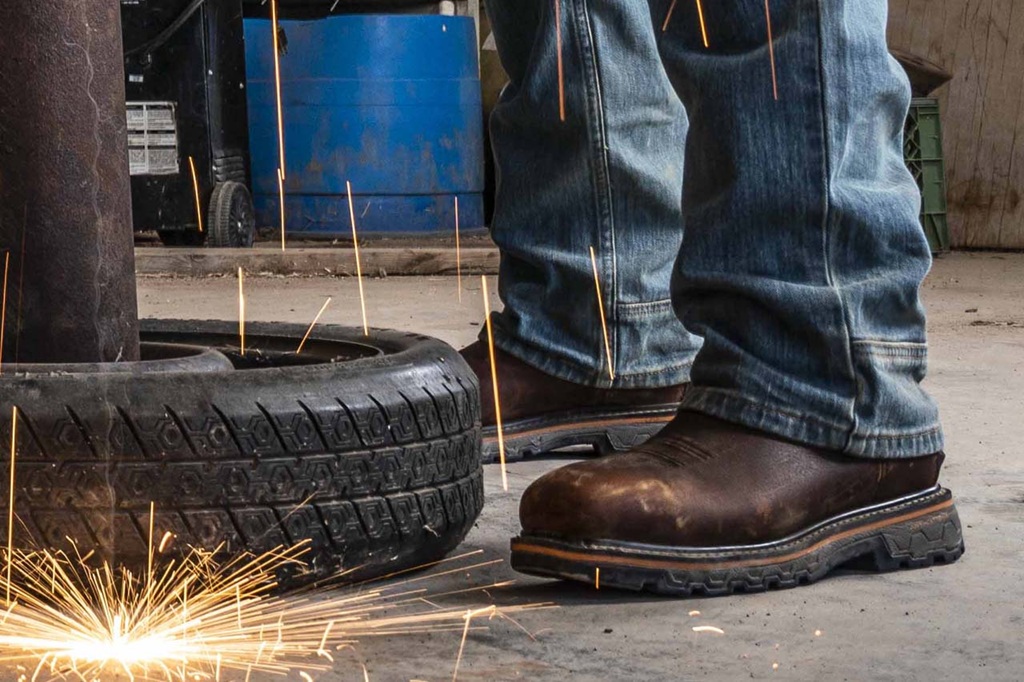
When selecting welding footwear, it’s crucial to look for boots that meet recognized safety standards. These standards ensure the footwear has been tested and proven to provide specific types of protection.
- ASTM F2413: This is the standard Specification for Performance Requirements for Protective (Safety) Toe Cap Footwear in the United States. Footwear complying with this standard will be labeled with specific codes indicating the protection it offers. Common markings include:
- I/75 (Impact Resistance): Indicates the toe cap can withstand an impact of 75 foot-pounds.
- C/75 (Compression Resistance): Indicates the toe cap can withstand a compressive load of 2,500 pounds.
- Mt/75 (Metatarsal Protection): Indicates the boot provides metatarsal protection against an impact energy of 75 foot-pounds.
- EH (Electrical Hazard): Indicates the boot is designed to provide secondary protection against incidental contact with live electrical circuits.
- PR (Puncture Resistance): Indicates the boot has a puncture-resistant plate in the sole.
- SD (Static Dissipative): Indicates the boot is designed to reduce the accumulation of excess static electricity. While not always a primary concern for all welding, it can be relevant in specific environments.
- EN ISO 20345: This is the European standard for safety footwear. It has various safety ratings (e.g., S1, S1P, S2, S3, S4, S5) which denote different combinations of protective features, including toe protection, penetration resistance, antistatic properties, energy absorption of the heel, water resistance, and cleated outsoles. For welding, boots meeting S3 standards with additional HRO (Heat Resistant Outsole) and potentially WG (Welding Guard) or M (Metatarsal Protection) classifications would be highly suitable.
Always check the labels and product descriptions to ensure the boots you choose meet the necessary standards for your specific work hazards.
What to Absolutely AVOID in Welding Shop Footwear
Just as important as knowing what to look for is knowing what to avoid:
- Shoes made of synthetic materials: Nylon, polyester, plastic, and other synthetic fabrics can melt or ignite when exposed to the high heat, sparks, or molten metal common in welding. This can lead to severe burns as the melted material adheres to the skin.
- Open-toed shoes, sandals, or canvas shoes (e.g., sneakers/trainers): These offer virtually no protection against the myriad hazards in a welding shop and are completely inappropriate.
- Low-cut shoes that expose the ankle: Ankles are prime targets for burns from sparks and spatter.
- Shoes with mesh or extensive breathable panels: While appealing for comfort, these panels (unless specifically engineered with flame-resistant materials and backing for welding environments) can allow sparks and small debris to enter the shoe.
- Wearing cuffed pants tucked into boots: Cuffs on pants can act like little buckets, collecting falling sparks and hot debris, which can then channel them directly into your boots or burn through the fabric. Pants should always be worn over the outside of the boots.
Related: The Ultimate Guide to Footwear That Protects from Chemicals and Slips
Comfort and Fit: Ensuring Your Boots Work With You, Not Against You
While protection is paramount, comfort and proper fit should not be overlooked. Ill-fitting boots can lead to blisters, foot fatigue, and even accidents if they impair your movement or cause distractions.
- The Importance of a Good Fit: Your toes should have enough room to wiggle, but your heel should not slip excessively when you walk. The boot should feel snug but not tight.
- Try Boots On Later in the Day: Feet tend to swell slightly throughout the day. Trying on boots in the afternoon or evening can help you get a more accurate fit for how they’ll feel during a workday.
- Wear Appropriate Work Socks: Always try on boots with the same type of thick, moisture-wicking work socks you intend to wear while welding.
- Break-in Period: New leather boots, especially sturdy ones, often require a break-in period. Wear them for short periods initially, gradually increasing the duration, to allow the leather to soften and conform to your feet.
- Comfort Features: Look for features like cushioned insoles, good arch support, and moisture-wicking linings. These can significantly reduce foot fatigue and discomfort during long shifts spent standing or moving. Padded collars and tongues can also enhance comfort around the ankle.
Investing in a comfortable, well-fitting pair of welding boots will not only make your workday more bearable but also contribute to your overall safety and productivity.
People Also Ask (FAQs)
Q1: Are steel toe boots always necessary for welding?
A: While not universally mandated by law in every single scenario, safety toe footwear (steel, composite, or alloy) meeting ASTM or equivalent standards is highly recommended and often required by employers in welding environments due to the significant risk of impact and compression injuries from heavy materials. The specific type (steel vs. composite) may depend on electrical hazard assessments and comfort preferences.
Q2: Can I wear regular leather work boots for welding?
A: Regular leather work boots are better than no protection, but they may lack specific features crucial for welding, such as high heat-resistant soles, flame-resistant stitching, metatarsal guards (if needed), or adequate electrical hazard protection. It’s best to choose boots specifically designed or confirmed to be suitable for welding hazards, ensuring they are made entirely of leather or other flame-resistant materials without meltable components.
Q3: How high should my welding boots be?
A: A minimum height of 6 to 8 inches is generally recommended to protect the ankles and lower shins from sparks, spatter, and burns. Taller boots can offer even more protection, especially in environments with a high volume of sparks.
Q4: What’s the best material for welding boot laces?
A: Leather or Kevlar® laces are the best options as they are flame-resistant and won’t melt when exposed to sparks. Avoid nylon or cotton laces. Using lace covers or spats provides additional protection.
Q5: How do I protect my boots from sparks and spatter?
A: Aside from choosing boots made from durable leather with covered laces, you can use leather spats or leggings that cover the top of your boots and lower legs. Regular cleaning and conditioning of leather boots can also help maintain their integrity and resistance.
Q6: How often should welding boots be replaced?
A: There’s no fixed timeline, as it depends on the intensity of use, the working environment, and the quality of the boots. Inspect your boots regularly for signs of wear and tear, such as cracks in the leather, damaged soles (e.g., melted spots, separation, loss of tread), exposed toe caps, or compromised stitching. If the protective features are compromised, the boots should be replaced immediately. Even if they appear intact, the protective qualities of materials can degrade over time and with exposure to heat and chemicals.
Related: Conquer the Elements in Style: The Ultimate Guide to Men’s Waterproof Chelsea Boots
Conclusion: Your Feet Are Your Foundation
In the demanding world of welding, where skill and precision are paramount, personal safety must always be the top priority. The footwear you choose is a critical component of your protective gear, shielding you from a multitude of potential injuries that can have lasting consequences. Opting for high-quality, purpose-built welding boots constructed from durable leather, equipped with appropriate safety toes, heat and slip-resistant soles, adequate height, and other essential protective features is not an expense but an investment in your health and career longevity.
Never compromise on safety. Take the time to select footwear that meets recognized standards and addresses the specific hazards of your welding environment. By ensuring your feet are properly protected, you can step into your welding shop with confidence, ready to tackle the challenges of your craft safely and effectively. Your feet are your foundation; protect them well.