When you’re gearing up for an alpine adventure or a serene forest walk, the boots on your feet are your most crucial companions. Many outdoor enthusiasts often wonder about the origins of their gear: “Where is hike footwear based?” This question, seemingly simple, opens up a fascinating exploration into a global industry. While you might be searching for a single entity named “Hike Footwear,” the reality is a diverse landscape of dedicated brands, each with its own unique home base and story.
You might encounter an online retailer operating under the name “Hike Footwear,” with a listed base in Hialeah, Florida, and a secondary address in Sheridan, Wyoming. This company primarily sells directly to consumers online, often focusing on specific niches like barefoot-style shoes. It’s important to distinguish such retailers from the large-scale, globally recognized manufacturers that design, produce, and distribute a wide array of hiking and outdoor footwear, often through extensive retail networks and with decades of research and development behind them. Sometimes, “hike footwear” is also used as a general category description by larger companies showcasing their range of hiking-specific products.
However, for the seasoned trekker or the aspiring adventurer, the question often points towards the renowned brands whose logos are a familiar sight on trails worldwide. Where do these titans of the trail call home? The answer isn’t a single point on the map but a constellation of innovation hubs, historic workshops, and global headquarters spread across continents.
The “Hike Footwear” Name: A Specific Brand or a Broader Category?
As we delve into the origins of hiking footwear, it’s useful to clarify the name “Hike Footwear.” As mentioned, a specific online business entity named “Hike Footwear” does exist, primarily operating out of Hialeah, Florida. This company appears to focus on direct-to-consumer online sales, with some of its product listings, particularly for “Lorax Pro Barefoot Shoes,” appearing on platforms like eBay and often indicating manufacturing origins in Asia. While this brand carves out its niche, particularly in the barefoot and minimalist shoe sector, it doesn’t represent a major, diversified hiking boot manufacturer in the league of names that have dominated the outdoor industry for decades. Customer reviews and business bureau information for such online-centric brands can offer insights into their operations and customer service experiences.
Beyond this specific entity, the term “hike footwear” is frequently used as a generic descriptor. For instance, established companies like Red Wing Shoes (which owns the Vasque brand, a respected name in hiking boots) might categorize their hiking-specific products under a “Hike Footwear” section on their websites or in catalogs. In this context, it’s a functional label, not a brand name itself.
Understanding this distinction is key. While the Florida-based “Hike Footwear” has a defined location, the broader quest to understand where quality hiking footwear originates takes us on a global journey, exploring the headquarters, design studios, and manufacturing centers of the industry’s most established and innovative players. These are the brands whose products are trusted by millions for their durability, comfort, and performance on the most demanding terrains.
Global Peaks of Innovation: Where Leading Hiking Footwear Brands Are Truly Based
The heart of the hiking footwear industry beats in several key regions around the world, each contributing a unique heritage and expertise. These are not just addresses on a map, but epicenters of design, craftsmanship, and a deep understanding of what the human foot needs to conquer the wild.
North America: A Pioneering Spirit
The United States and Canada have a rich history in developing robust outdoor gear, and hiking footwear is no exception.
- Merrell: Headquartered in Rockford, Michigan, USA, Merrell (part of Wolverine World Wide) has become almost synonymous with hiking, famed for its popular Moab series. Their focus on comfort and accessibility has made them a go-to for casual and serious hikers alike.
- Keen: Based in Portland, Oregon, USA, Keen is renowned for its distinctive protective toe bumpers and a strong commitment to sustainability and social responsibility. Portland, with its proximity to diverse outdoor landscapes, is a natural home for such a brand.
- Columbia Sportswear: Also hailing from Portland, Oregon, Columbia has a vast portfolio of outdoor gear, with its footwear designed for a range of activities, emphasizing functionality and technological innovation.
- The North Face: Now headquartered in Denver, Colorado, USA (part of VF Corporation), The North Face is a global icon for exploration and adventure, with its hiking footwear forming a core part of its extensive product line.
- Arc’teryx: Based in North Vancouver, British Columbia, Canada, Arc’teryx is known for its high-performance, minimalist designs and cutting-edge materials, catering to the serious mountaineer and hiker.
- Oboz Footwear: With its headquarters in Bozeman, Montana, USA, Oboz benefits from the rugged testing grounds right outside its doorstep, influencing their trail-focused designs.
Europe: The Cradle of Mountaineering and Craftsmanship
Europe, particularly countries with strong alpine traditions, boasts a legacy of exceptional boot-making.
- Salomon: Originating and headquartered in Annecy, France, in the heart of the French Alps, Salomon has evolved from ski bindings to become a leader in trail running and hiking footwear, known for innovation and athletic performance.
- Lowa: From Jetzendorf, Germany, Lowa has been crafting high-quality mountaineering and hiking boots since 1923. They are celebrated for their precision, durability, and continued manufacturing presence in Europe.
- La Sportiva: Nestled in Ziano di Fiemme, Italy, in the Dolomites, La Sportiva is a legendary name in climbing and mountaineering footwear, with a rich family history and a commitment to producing highly technical boots, many still made in Italy.
- Mammut: This Swiss company, based in Seon, Switzerland, has over 150 years of experience in mountain sports, and their footwear reflects this deep heritage of alpine expertise.
- Hi-Tec: Founded in Shoeburyness, Essex, England, in 1974, Hi-Tec (which created the first lightweight hiking boot, the Sierra Lite) now has its global headquarters in Amsterdam, Netherlands. It continues to offer a wide range of affordable and reliable outdoor footwear.
- Hanwag: Another historic German brand from Vierkirchen, Hanwag has been making high-quality alpine and trekking boots for a century, emphasizing traditional craftsmanship and European production.
- Meindl: With an incredible history dating back to 1683 in Kirchanschöring, Bavaria, Germany, Meindl is another cornerstone of German boot-making excellence, known for durable and comfortable hiking and mountain boots.
This geographical spread highlights how different cultures and environments have shaped the evolution of hiking footwear, from the innovative spirit of North American outdoor brands to the deep-rooted artisanal traditions of European makers.
The Anatomy of a Global Brand: More Than Just a Headquarters
In today’s interconnected world, the “base” of a hiking footwear brand is often multifaceted. While the headquarters dictates strategy, marketing, and often houses core research teams, the journey of a hiking boot from concept to trail involves a global network.
Where the Vision is Born: Design and Development Hubs
The soul of a hiking boot—its design, technology, and ergonomic intelligence—is typically born in dedicated Research and Development (R&D) centers. These are often located near the brand’s headquarters, especially for companies that pride themselves on a strong design heritage linked to their local environment. Engineers, designers, material scientists, and even podiatrists collaborate in these hubs. They leverage advanced technologies like 3D modeling, biomechanical analysis, and rapid prototyping.
Crucially, these centers are often situated near mountains, forests, and trails, allowing for immediate and rigorous field testing by professional athletes and dedicated wear-testers. This iterative process of design, build, and test is what leads to breakthroughs in sole compounds for better grip, innovative lacing systems for a perfect fit, breathable yet waterproof membranes, and durable yet lightweight materials. For example, Italian and German brands often emphasize their in-house or local European R&D and even some manufacturing, linking it to generations of expertise. Similarly, brands in the Pacific Northwest of the USA benefit from the region’s diverse terrain for testing and inspiration.
The Sole of Production: Manufacturing Footprints Across the Globe
While design and R&D might be rooted in the brand’s home country, the actual manufacturing of hiking footwear is a truly global affair. The majority of mass-produced hiking boots and shoes today are manufactured in Asia, with countries like Vietnam, China, and Cambodia being major production centers. These locations offer skilled labor, established manufacturing infrastructure, and the capacity for large-scale production, which helps keep footwear accessible to a broader market.
However, this is not the complete picture. Several high-end European brands, such as Lowa and La Sportiva, proudly maintain significant portions of their manufacturing within Europe (e.g., Germany, Italy, Slovakia, Romania). This often allows for tighter quality control over complex constructions, the use of specialized local materials, and the preservation of traditional cobbling techniques. Some brands, like Keen, have also made efforts to bring some assembly or manufacturing back to their home countries, such as the USA, highlighting “American Built” lines.
The decision of where to manufacture involves a complex balance of cost, quality control, access to materials, labor skills, and logistical considerations. Therefore, a single pair of hiking boots might have its leather sourced from one country, its specialized sole unit from another, its waterproof membrane from a third, all before being assembled in a fourth.
Related: Stepping into Safety: Choosing the Right Footwear for the Welding Shop
Heritage and Terroir: Why Certain Regions Excel in Hiking Footwear
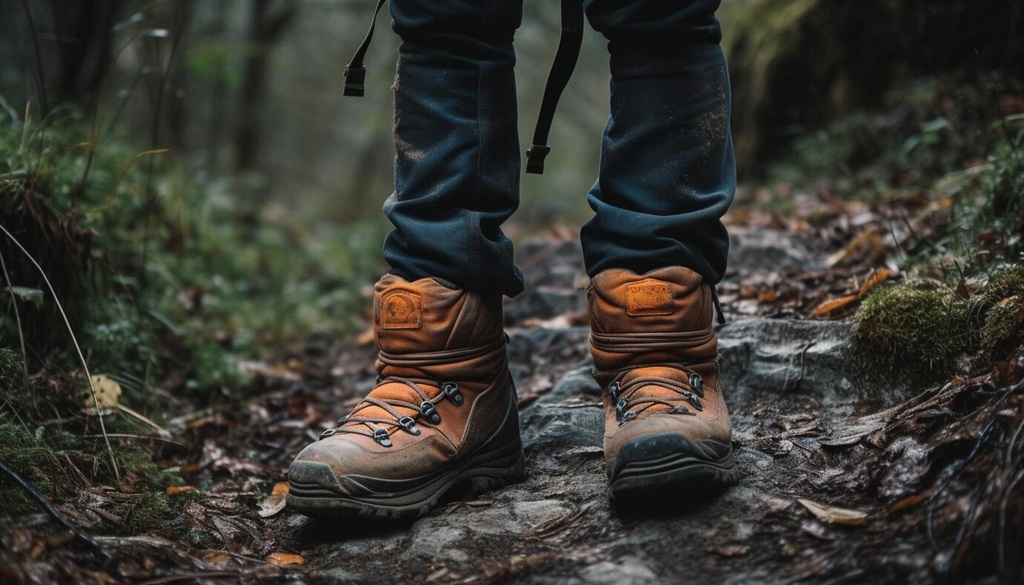
The concentration of renowned hiking footwear brands in specific regions isn’t accidental. It’s often a result of a confluence of historical, cultural, and geographical factors – a kind of “terroir” for boot-making.
Europe’s Alpine Legacy: Countries like Italy, Germany, Austria, and France are in the shadow of the Alps, the birthplace of modern mountaineering. This proximity fostered a deep-seated culture of mountain exploration and, consequently, a demand for specialized, high-performance footwear. Generations of cobblers and artisans honed their skills, passing down knowledge that evolved into sophisticated manufacturing processes. The challenging local terrain served as the ultimate testing ground, driving innovation in durability, support, and grip. Brands from these regions often carry a cachet of quality and tradition.
North America’s Outdoor Culture: The vast wilderness areas of the United States and Canada, from the Rockies to the Appalachians and the Pacific Northwest, fueled a different kind_of outdoor culture. While also encompassing serious mountaineering, it strongly embraced hiking, backpacking, and trail running as accessible recreational activities. This spurred the growth of brands focused on versatility, comfort for long-distance trails, and innovation in lightweight materials. The entrepreneurial spirit and a strong consumer market for outdoor goods also played a significant role in fostering these brands.
The Rise of Modern Manufacturing Hubs: While heritage is important, the ability to produce high-quality footwear efficiently and at scale has led to the prominence of manufacturing centers, primarily in Asia. These regions developed expertise in complex assembly processes, invested in modern factories, and became integral to the global supply chain for nearly all major footwear brands, including those in the hiking sector.
The interplay between these factors – historical craftsmanship, demanding local environments, a vibrant outdoor culture, and advanced manufacturing capabilities – has shaped where the best hiking footwear is designed and made today.
Choosing Your Trail Companion: What a Brand’s Base Might Tell You
Understanding where a hiking footwear brand is based and where its products are made can offer some clues, though it’s rarely a simple equation for determining quality.
-
Heritage and Specialization:
A brand headquartered in the Italian Dolomites (like La Sportiva) is likely to have a strong focus on climbing and mountaineering footwear, reflecting its alpine roots. A brand from the Pacific Northwest (like Keen or Columbia) might emphasize versatility for varied trails and weather conditions.
-
Manufacturing Location and Price Point:
Boots made in Europe or North America often come with a higher price tag, reflecting generally higher labor costs and sometimes the use of more traditional, labor-intensive construction methods or locally sourced premium materials. Many Asian-made boots, however, offer excellent quality and technology at more accessible prices due to efficiencies of scale and labor costs. It’s incorrect to assume one is inherently superior to the other; quality control and brand standards are paramount regardless of location.
-
Innovation Focus:
Some brands are known for specific technological innovations (e.g., Salomon’s QuickLace system or Vibram soles, which are themselves an Italian innovation used by many brands). The location of a brand’s R&D can influence its access to certain technologies or material science expertise.
-
Ethical and Sustainability Commitments:
A brand’s headquarters location can sometimes correlate with its adherence to certain labor and environmental standards, especially for companies based in regions with stricter regulations. However, many global brands are increasingly transparent about their entire supply chain and are adopting ethical sourcing and sustainability practices regardless of their primary base. Consumers are encouraged to research a brand’s specific policies.
Ultimately, the “best” hiking boot is subjective and depends on individual fit, intended use, and personal preferences. However, knowing a brand’s origins can add another layer to your decision-making process, connecting you to the history, craftsmanship, and environment that shaped your trusted trail companions.
Related: The Ultimate Guide to Footwear That Protects Your Toes From Falling Objects and Crushing
People Also Ask (FAQs)
Q: Is there one major global brand called “Hike Footwear”?
A: No, there isn’t one single, dominant global brand named exactly “Hike Footwear.” There is an online retailer with this name based in Hialeah, Florida, focusing on direct-to-consumer sales, often of barefoot-style shoes. However, the term “hike footwear” is more commonly used as a general category for hiking boots and shoes produced by many different established outdoor brands.
Q: Where are most well-known hiking boot brands headquartered?
A: Prominent hiking boot brands have headquarters in several key regions: * USA: Merrell (Michigan), Keen (Oregon), Columbia (Oregon), The North Face (Colorado), Oboz (Montana). * Europe: Salomon (France), Lowa (Germany), La Sportiva (Italy), Mammut (Switzerland), Hi-Tec (Netherlands, founded in the UK), Hanwag (Germany), Meindl (Germany).
Q: Which countries are known for making high-quality hiking boots?
A: Countries with a strong heritage in boot-making, particularly for high-end and specialized models, include Italy and Germany. Many boots from these countries are still manufactured domestically or within Europe. However, excellent quality hiking boots are also produced in Asian countries like Vietnam and China, where many major brands have their manufacturing operations, adhering to strict quality control standards.
Q: Where are popular brands like Merrell, Salomon, Lowa, Keen, and Hi-Tec based?
A: * Merrell: Rockford, Michigan, USA. * Salomon: Annecy, France. * Lowa: Jetzendorf, Germany. * Keen: Portland, Oregon, USA. * Hi-Tec: Global HQ in Amsterdam, Netherlands (originally founded in Essex, England).
Q: Does it truly matter where hiking boots are made?
A: While the country of manufacture can influence factors like cost and sometimes specific construction techniques, the brand’s quality control processes, material standards, design, and R&D are more critical determinants of a boot’s performance and durability. Excellent boots are made in various countries. It’s more important to focus on the brand’s reputation, the specific technologies used, the fit for your foot, and whether the boot is appropriate for your intended hiking activities. Researching a brand’s ethical and sustainability practices related to its manufacturing is also a growing consideration for many consumers.
Conclusion: The Global Journey of Your Hiking Footwear
The question “where is hike footwear based?” doesn’t lead to a single, simple answer but rather unveils a rich tapestry of global craftsmanship, innovation, and industrial geography. From the specific online retailer named “Hike Footwear” in Florida to the historic alpine workshops of Europe and the dynamic outdoor hubs of North America, the origins of your trail companions are diverse.
While a brand’s headquarters provides a center of gravity for its identity and innovation, the journey of a modern hiking boot is truly international, involving design specialists, material suppliers, and manufacturing partners from across the globe. Understanding this landscape—the heritage of European craftsmanship, the pioneering spirit of American brands, and the crucial role of Asian manufacturing—allows for a deeper appreciation of the technology, skill, and global cooperation that go into creating the footwear that carries us on our adventures. Ultimately, the best base for your hiking footwear is one that delivers quality, durability, and the perfect fit, enabling you to explore the great outdoors with confidence and comfort, no matter where on the map its story began.