Riding a motorcycle in humid weather can feel exhausting, especially during long commutes in New York and California. High moisture levels often trap heat inside riding gear and make sweat dry slowly. According to the National Weather Service, summer humidity levels in parts of New York regularly exceed 70%, while several coastal areas in California also experience sticky marine humidity during warmer months. Because of this, many riders struggle to stay comfortable without sacrificing safety. Fortunately, smart clothing choices and breathable gear can help you stay cool, dry, and protected during every ride.
Understand The Humidity Differences Between NY And CA
New York humidity usually feels dense and heavy during late spring and summer. Urban traffic in areas like Manhattan and Brooklyn increases body heat because riders stop frequently at lights. In addition, subway vents and crowded streets create extra warmth around commuting routes. Therefore, lightweight but protective riding gear becomes essential for daily travel.
California humidity varies depending on the region and season. Coastal cities like San Diego and San Francisco often experience cool marine moisture in the morning. Meanwhile, inland regions become hot and humid during afternoon traffic. Because conditions change quickly, riders need flexible layering systems that adapt throughout the day.
Choose Moisture-Wicking Base Layers
A strong base layer helps regulate body temperature during humid rides. Cotton shirts trap sweat and stay wet for hours, which causes discomfort and skin irritation. Instead, synthetic moisture-wicking fabrics pull sweat away from the body more efficiently. As a result, your skin stays cooler during long commutes.
Look for lightweight compression shirts designed for athletic or motorcycle use. Many riders prefer polyester blends because they dry quickly after sweating. Merino wool also works well since it controls odor naturally and stays breathable in humid conditions. However, avoid thick thermal layers during summer commuting months.
Best Features To Look For In Base Layers
- Sweat-wicking fabric
- Flat seams to reduce rubbing
- Lightweight stretch material
- Fast-drying technology
- Ventilated mesh zones
Pick A Breathable Motorcycle Jacket
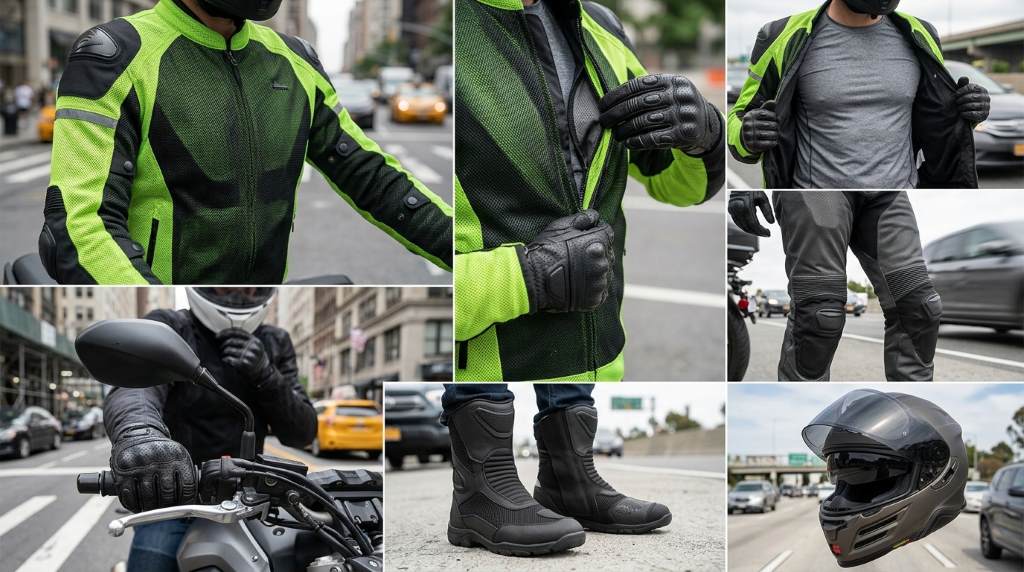
Your motorcycle jacket matters more than any other piece of commuting gear. Heavy leather jackets may offer protection, but they often feel unbearable during humid traffic conditions. Therefore, many NY and CA riders choose mesh textile jackets for warm-weather commuting. These jackets increase airflow while still protecting against road rash.
A good mesh jacket should include CE-rated armor in the elbows, shoulders, and back. Ventilation panels also improve airflow during stop-and-go traffic. In coastal California, riders often prefer jackets with removable waterproof liners because mornings can feel cool and damp. Meanwhile, New York commuters usually benefit from lightweight jackets with large airflow zones for crowded urban riding.
Features That Improve Comfort In Humidity
- Large mesh ventilation panels
- Removable liners
- Adjustable cuffs and waist straps
- Reflective materials for visibility
- Lightweight armor inserts
Wear Riding Pants That Allow Airflow
Many commuters overlook riding pants, yet they greatly affect comfort levels in humidity. Regular jeans trap heat and absorb sweat quickly during summer rides. In contrast, motorcycle riding pants with mesh construction allow better ventilation and faster drying. Consequently, riders feel less sticky after reaching work or home.
Textile riding pants with zippered vents work especially well in California’s changing temperatures. New York riders often benefit from abrasion-resistant riding jeans with stretch panels because they balance comfort and urban style. Additionally, some commuting pants include removable liners that help during rainy mornings.
Avoid These Common Mistakes
- Wearing thick denim in humid weather
- Choosing dark colors that absorb heat
- Ignoring ventilation zippers
- Using rain pants without airflow
- Riding in non-protective gym clothing
Select The Right Motorcycle Helmet
Helmet ventilation becomes extremely important during humid commuting conditions. Poor airflow inside a helmet creates sweat buildup around the forehead and neck. Therefore, riders should prioritize helmets with multiple intake and exhaust vents. Good airflow keeps your head cooler and improves concentration during traffic-heavy rides.
Full-face helmets still offer the best protection for city commuting. However, modern ventilated models reduce heat significantly compared to older designs. In California, some riders use modular helmets because they allow quick airflow during traffic stops. Meanwhile, New York commuters often prefer compact aerodynamic helmets that reduce fatigue during highway riding.
Helpful Helmet Features
- Anti-fog visor systems
- Moisture-wicking inner liners
- Adjustable air vents
- Washable padding
- Lightweight shell construction
Choose Lightweight Motorcycle Gloves
Sweaty hands create discomfort and reduce grip control during humid rides. Thick winter gloves trap moisture and make hands feel overheated within minutes. Instead, summer motorcycle gloves with perforated materials improve airflow dramatically. Consequently, riders maintain better control and comfort during daily commuting.
Mesh gloves with knuckle protection work well for humid city riding. Leather-palmed designs also improve grip without adding excessive heat. In addition, touchscreen-compatible gloves help commuters quickly use phones or GPS devices without removing gear at every stop.
Wear Breathable Motorcycle Boots
Foot discomfort becomes a major problem during high-humidity commuting. Heavy waterproof boots often trap sweat and increase odor throughout the day. Therefore, many riders switch to ventilated riding shoes or lightweight motorcycle boots during summer. Breathable footwear keeps feet drier and reduces fatigue during long urban rides.
New York riders often prefer ankle-high riding shoes because they work well for walking around the city after parking. California commuters usually choose vented touring boots for highway comfort and airflow. Regardless of location, protective ankle support remains essential for motorcycle safety.
Dress Smart For Morning And Evening Temperature Changes
Humidity levels often shift throughout the day in both NY and CA. Early mornings may feel cool and damp, while afternoons become hot and sticky. Because of this, layering remains the smartest commuting strategy. Riders can remove or add layers depending on weather conditions.
Packable windbreakers help during breezy California coastal mornings. Meanwhile, lightweight waterproof shells work well during sudden summer storms in New York. Riders who plan for changing conditions stay more comfortable throughout the entire commute.
Smart Layering Tips
- Use thin removable layers
- Avoid bulky sweatshirts
- Carry compact rain protection
- Store extra clothing in saddlebags
- Choose gear with zippered vents
Stay Visible Without Overheating
Visibility matters during humid weather because fog, haze, and summer rain can reduce driver awareness. However, some reflective gear feels thick and uncomfortable in high heat. Therefore, riders should choose lightweight reflective materials integrated into breathable gear. This approach improves safety without adding unnecessary warmth.
Bright-colored jackets also help commuters stay visible in crowded traffic. Light gray, white, and neon yellow reflect more sunlight compared to black gear. As a result, riders stay slightly cooler during long waits at intersections and traffic jams.
Manage Sweat During Long Commutes
Sweat management becomes essential for riders traveling more than 30 minutes daily. Excess moisture causes discomfort and creates odor inside riding gear. Therefore, commuters should carry small personal care items to stay fresh after arriving at work. Simple habits can make humid commuting much easier.
Many experienced riders keep microfiber towels inside their backpacks. Cooling towels also help during extremely humid afternoons in New York traffic. Additionally, travel-sized deodorant and spare shirts improve comfort during longer workdays.
Helpful Sweat-Control Essentials
- Cooling towel
- Spare moisture-wicking shirt
- Travel deodorant
- Portable body wipes
- Compact hydration bottle
Hydration Matters More Than Most Riders Realize
High humidity prevents sweat from evaporating properly, which increases dehydration risk. Many commuters underestimate how much water they lose during short rides. Even a 30-minute commute in heavy traffic can drain energy levels quickly. Therefore, proper hydration should become part of your riding routine.
Drink water before putting on your riding gear instead of waiting until arrival. Riders in California’s inland regions especially need extra hydration during afternoon heat. Meanwhile, New York riders often forget hydration because humid air feels less dry than desert heat. Nevertheless, dehydration still happens rapidly during summer commuting.
Rain Preparation For Humid Weather
Humidity often brings sudden rainstorms, especially during summer afternoons in New York. California coastal riders also encounter misty marine moisture and unexpected drizzle. Because of this, waterproof planning remains important even during warm weather. However, heavy rain gear can become uncomfortable in humid conditions.
Choose lightweight waterproof outer shells instead of thick rubber rain suits. Compact rain layers fit easily inside backpacks or motorcycle storage compartments. In addition, anti-fog visor treatments help maintain visibility during rainy and humid rides.
Best Fabrics For Humid Motorcycle Commuting
Fabric choice directly affects comfort during humid riding conditions. Some materials absorb sweat heavily, while others help moisture evaporate more efficiently. Therefore, understanding fabric performance can improve your commuting experience significantly.
Recommended Fabrics
- Polyester blends for fast drying
- Mesh textiles for airflow
- Merino wool for odor control
- Stretch nylon for mobility
- Kevlar-lined fabrics for protection
Fabrics To Avoid
- Thick cotton
- Heavy untreated denim
- Non-breathable vinyl materials
- Thick fleece
- Plastic-based rain ponchos
Common Commuting Gear Setup For NY Riders
New York commuters often face crowded streets, heavy traffic, and intense humidity during summer. Therefore, their gear setup usually focuses on airflow and urban practicality. Lightweight protective clothing helps riders stay comfortable without carrying bulky equipment.
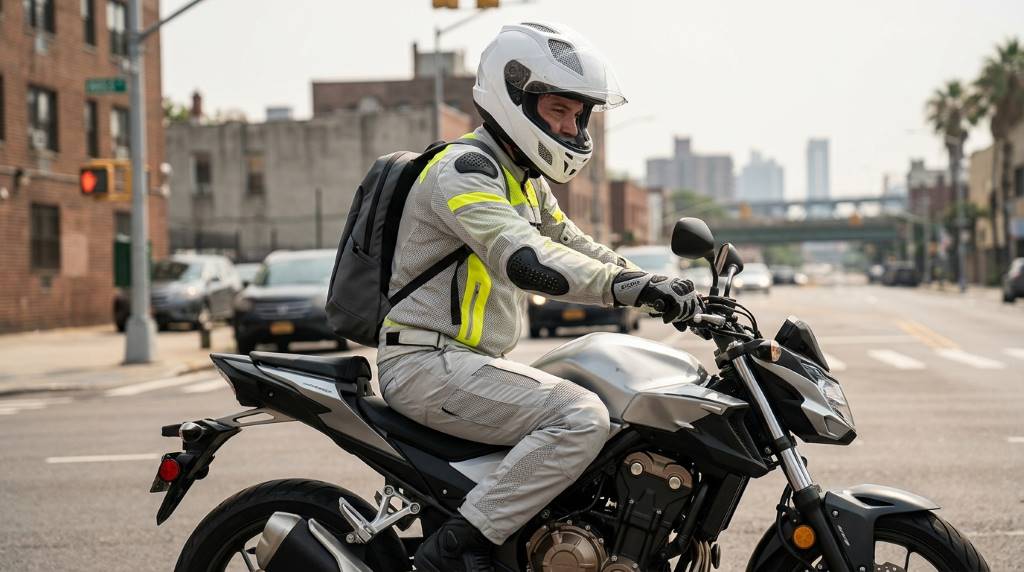
A typical NY setup includes a ventilated textile jacket, riding jeans, lightweight gloves, and a compact backpack. Many commuters also keep spare office clothes at work to avoid carrying extra weight daily. Because parking and walking are common in NYC, comfortable riding shoes become especially important.
Common Commuting Gear Setup For CA Riders
California riders experience wider temperature swings depending on region and time of day. Coastal riders may begin the morning in fog and finish the afternoon in dry heat. Consequently, versatile layering becomes more important than extremely lightweight gear alone.
A common California setup includes a mesh touring jacket with removable liners, ventilated boots, and modular helmets. Riders often carry hydration packs during longer highway commutes. Additionally, UV-resistant gear helps reduce sun exposure during bright afternoon rides.
How To Keep Riding Gear Fresh In Humid Weather
Humid conditions quickly create odor and bacteria inside motorcycle gear. Sweat-soaked equipment also loses comfort and may wear out faster over time. Therefore, proper maintenance helps gear stay breathable and hygienic throughout summer commuting months.
Wash removable helmet liners weekly during peak humidity seasons. Hang jackets and gloves in ventilated spaces immediately after riding. Furthermore, avoid storing damp gear inside closed backpacks or lockers because trapped moisture creates mildew smells quickly.
Conclusion
Learning how to dress for a motorcycle commute in high humidity in NY and CA can improve comfort, safety, and overall riding enjoyment. Breathable gear, moisture-wicking layers, and proper ventilation make daily commuting far more manageable during sticky summer conditions. Riders who prepare for changing weather also stay more focused and less fatigued on the road. Start upgrading your riding setup gradually and test different combinations to find what works best for your local climate. With the right gear strategy, humid commuting becomes far easier and much more enjoyable.
FAQ
What Is The Best Jacket For Humid Motorcycle Commuting?
A mesh textile motorcycle jacket with CE armor offers the best balance of airflow and protection.
Should I Wear Cotton While Riding In Humid Weather?
No, cotton traps sweat and dries slowly, which increases discomfort during commuting.
Are Full-Face Helmets Too Hot For Summer Riding?
Modern ventilated full-face helmets provide strong airflow while maintaining maximum protection.
How Can I Reduce Sweat During Motorcycle Commutes?
Use moisture-wicking layers, ventilated gear, and stay hydrated before riding.
Do California And New York Require Different Riding Gear?
Yes, California often needs flexible layering while New York usually demands maximum ventilation for dense urban humidity.