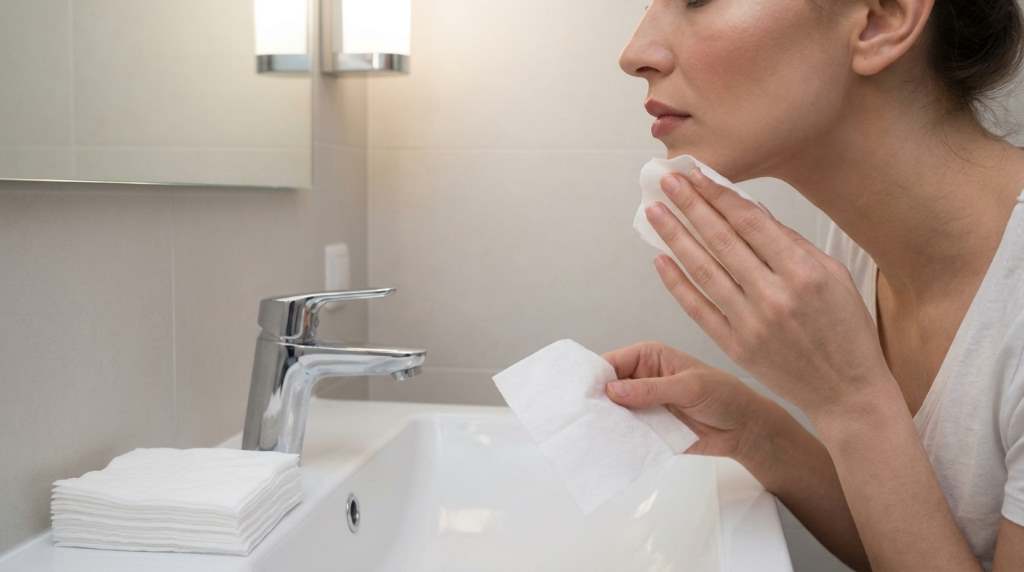
Use Neutrogena Makeup Remover Wipes with gentle, controlled strokes across your face, eyelids, lips, and neck. Avoid aggressive rubbing, keep the wipe away from your eyes, and reseal the package immediately afterward. Neutrogena reports 92% of users found its micellar wipes effortless for makeup removal during a four-week study. The same study found 97% felt their skin looked clean afterward.
If you want a convenient first step after a long day, Neutrogena Makeup Remover Wipes can simplify your routine. However, safe use depends more on technique than speed. The right method minimizes unnecessary friction while helping remove foundation, sunscreen, lipstick, and eye makeup.
Key Takeaways
- Use one fresh wipe and unfold it completely before cleansing.
- Start with larger facial areas before carefully treating the eye area.
- Press and lift makeup instead of scrubbing stubborn areas repeatedly.
- Use extra caution around lashes, eyelids, and other delicate skin.
- Consider a gentle cleanser afterward if residue remains on your skin.
- Reseal the package tightly so remaining wipes stay properly moist.
- Never flush used wipes because they can create plumbing problems.
Why Your Technique Matters More Than You Think
Makeup wipes offer convenience, but convenience can encourage rushed cleansing habits. Many people compensate for stubborn makeup by rubbing harder instead of allowing cleansing ingredients to loosen residue.
That approach can create unnecessary friction, especially around the eyes and lips. Therefore, safe removal requires patience, light pressure, and deliberate movements.
Neutrogena’s current cleansing wipes use micellar technology to help capture makeup, oil, and impurities. Some versions also use emollient ingredients that help dissolve stubborn cosmetic residue.
However, product performance does not eliminate the need for careful technique. Even a gentle wipe can irritate skin when someone repeatedly scrubs the same area.
Prepare Your Skin Before Using the Wipe
First, wash your hands before touching your face or handling the wipe. Clean hands reduce the chance of transferring additional dirt, oil, or bacteria onto freshly cleansed skin.
Next, check the package before opening it. Avoid using wipes that look unusually dry, contaminated, damaged, or improperly sealed.
If you wear contact lenses, remove them before working around your eyes. This simple step can reduce discomfort if cleansing liquid reaches the eye area.
Check the Formula Before Regular Use
Neutrogena offers several makeup-removing wipe variations, and formulas can differ between products. Always check your specific package for its current ingredient list and directions.
Fragrance-free options may suit people who prefer to minimize potential fragrance exposure. However, fragrance-free does not automatically mean every person will tolerate a product perfectly.
If your skin reacts easily, test the product on a small area first. Stop using it if you experience persistent burning, swelling, redness, or significant discomfort.
The Safest Way to Use Neutrogena Makeup Remover Wipes
1. Remove the Wipe Without Touching Unnecessary Surfaces
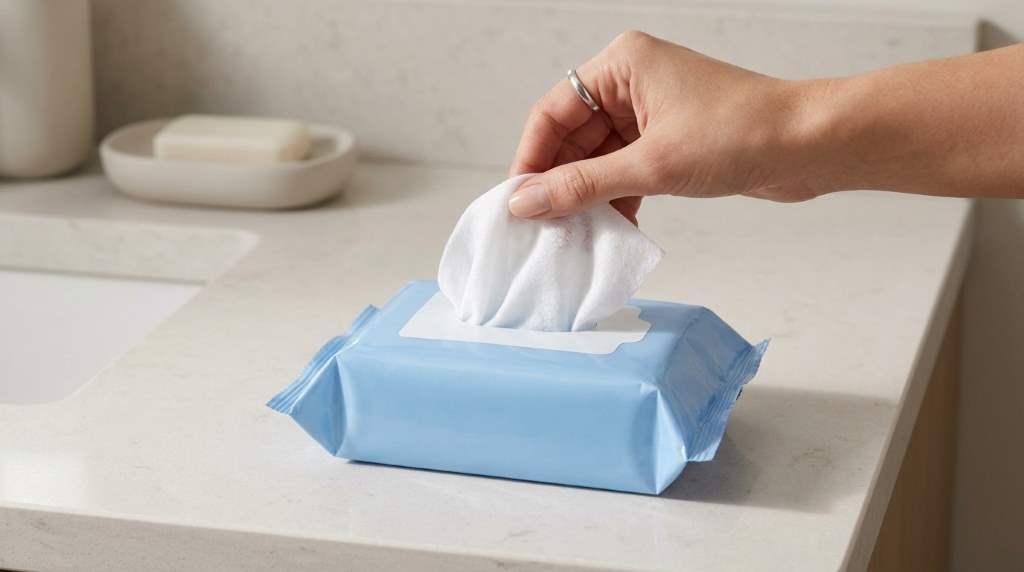
Open the package and remove one wipe with clean hands. Avoid placing the wipe on countertops, sinks, towels, or other potentially contaminated surfaces.
Immediately reseal the package after removing the wipe. Proper sealing helps prevent the remaining wipes from drying before their intended use.
2. Unfold the Wipe Completely
Unfold the wipe before touching your face. A fully opened wipe gives you more usable surface area and improves control during cleansing.
Instead of bunching the cloth into a small ball, keep it comfortably flat. This arrangement helps distribute pressure more evenly across your skin.
3. Start With the Least Sensitive Areas
Begin around your cheeks, forehead, chin, and other broader facial areas. Use slow outward strokes instead of repeatedly moving back and forth.
Then move toward your jawline and neck. These areas often collect foundation, bronzer, sunscreen, and setting products throughout the day.
4. Use Gentle Pressure Around the Eyes
Close your eyes before cleaning eyelids or removing mascara. Place the wipe gently over the closed eyelid for several seconds.
Allow the cleansing solution to loosen makeup before moving the wipe. Then sweep gently toward the outer corner without pulling the skin.
Never scrub the lash line aggressively to remove waterproof mascara. Instead, repeat gentle passes with a clean section of the wipe.
5. Clean the Lips Carefully
Press the wipe lightly against lipstick before sweeping across your lips. This technique helps loosen long-wearing color without excessive rubbing.
Pay attention to the corners of your mouth, where lipstick and foundation often accumulate. Finish with a gentle pass around the surrounding skin.
6. Finish Around the Hairline and Neck
Makeup frequently remains along the hairline after facial cleansing. Run the wipe gently around this area without pulling hair across your skin.
Finally, wipe down your neck if you applied foundation, powder, sunscreen, or body makeup there. Check your skin under bright lighting before finishing.
How to Remove Waterproof Makeup Without Scrubbing
Waterproof mascara and long-wear foundation often require more patience than ordinary makeup. Increasing pressure usually creates more friction without improving removal proportionally.
Instead, hold the wipe against the makeup briefly. This gives the cleansing formula more time to interact with cosmetic oils and pigments.
Afterward, sweep the wipe gently across the area. Repeat only when necessary, using a clean section whenever possible.
If stubborn residue remains, consider a dedicated eye makeup remover or cleansing product. This approach can reduce repeated friction around particularly sensitive areas.
Should You Rinse After Using Neutrogena Makeup Wipes?
Neutrogena directions for several wipe products state that rinsing is unnecessary. Therefore, you can follow the package directions when you need quick, convenient cleansing.
However, some people prefer rinsing or following with a gentle cleanser. Cleansing wipes can leave traces of cleansing agents, makeup residue, or skincare ingredients behind.
If your skin feels sticky, tight, coated, or uncomfortable afterward, consider a second cleansing step. A mild facial cleanser can provide a more complete end-of-day routine.
People with sensitive skin should pay attention to how their skin responds. Your personal tolerance matters more than a general claim about rinse-free use.
What to Do After Makeup Removal
After removing makeup, inspect your face for visible residue. Pay particular attention to the lash line, hairline, nose creases, and corners around your mouth.
Next, apply your normal skincare products according to your routine. A gentle moisturizer can help support comfortable skin after cleansing.
If you plan to sleep immediately, make sure you remove all visible makeup first. Leaving cosmetics behind can interfere with a clean nighttime skincare routine.
Common Mistakes That Can Cause Irritation
- Scrubbing aggressively: Hard rubbing creates unnecessary friction and can leave sensitive skin feeling irritated.
- Using a dry wipe: A dried wipe cannot distribute cleansing solution effectively across your skin.
- Pulling the eyelids: Tugging delicate skin can cause unnecessary mechanical stress around the eyes.
- Repeatedly using one small section: A saturated area becomes less effective as it collects makeup.
- Ignoring the neck: Foundation and sunscreen often remain below the jawline after facial cleansing.
- Leaving the package open: Air exposure can dry the remaining wipes prematurely.
- Flushing the wipe: Used wipes belong in the trash or appropriate disposal system.
Are Makeup Wipes Enough for a Complete Nighttime Cleanse?
Makeup wipes can remove makeup effectively, but they do not always replace traditional facial cleansing. Their strongest advantage remains speed, convenience, and portability.
For occasional use, travel, post-workout situations, or very late nights, wipes can provide a practical solution. For a more thorough routine, follow them with a gentle cleanser when your skin needs additional cleansing.
This distinction matters because removing visible makeup differs from completing a full skincare cleanse. A wipe can perform the first task without necessarily replacing every subsequent step.
How to Use the Wipes for Different Skin Needs
For Dry Skin
Use minimal pressure and avoid repeatedly wiping the same area. Follow with a moisturizer if your skin feels dry after cleansing.
Also, avoid unnecessarily extending the cleansing session. Longer wiping does not automatically produce cleaner or healthier skin.
For Oily Skin
Focus gently on areas that collect excess oil, including the forehead, nose, and chin. Avoid scrubbing simply because your skin feels oily.
If residue remains, use a suitable cleanser afterward. This approach can provide a more complete cleanse without excessive mechanical friction.
For Sensitive Skin
Choose a formula that matches your tolerance and examine its ingredient list before regular use. Patch testing can help identify obvious sensitivity before applying the product broadly.
Use particularly light pressure around the cheeks, eyelids, and mouth. Stop immediately if you develop persistent burning, swelling, or worsening irritation.
For Waterproof Eye Makeup
Give the wipe several seconds of gentle contact before moving it across closed eyelids. Then use short, controlled strokes rather than vigorous rubbing.
If mascara remains, repeat the process patiently. A dedicated eye makeup remover may work better than repeated wiping.
How to Store Neutrogena Makeup Remover Wipes Properly
Storage directly affects how well pre-moistened wipes perform. Keep the package closed tightly after every use.
Store the package away from excessive heat and direct sunlight. Extreme heat can affect moisture levels and product condition.
Do not add water or other liquids to dried wipes. Altering the formula can change its intended performance and preservation system.
Neutrogena Wipes Safety Checklist
| Step | Safe Practice | What to Avoid |
|---|---|---|
| Before use | Wash your hands and inspect the package. | Using damaged or contaminated wipes. |
| Face | Use gentle outward strokes. | Scrubbing repeatedly. |
| Eyes | Keep eyes closed and use light pressure. | Pulling eyelids or rubbing aggressively. |
| Waterproof makeup | Hold the wipe briefly before sweeping. | Increasing pressure immediately. |
| After use | Check for remaining residue. | Assuming one quick swipe removes everything. |
| Storage | Reseal the package tightly. | Leaving the opening exposed. |
| Disposal | Place used wipes in suitable waste. | Flushing wipes down toilets. |
When You Should Stop Using the Wipes
Stop using the product if you develop unusual burning, persistent redness, swelling, or significant itching. Do not continue testing a product that repeatedly causes discomfort.
Eye symptoms deserve additional caution because the surrounding tissue remains especially delicate. Seek professional medical advice if irritation persists or affects your vision.
Likewise, review the package ingredients if you develop a reaction after changing products. Identifying a potential trigger can help you choose future skincare products more carefully.
What Competitor Guides Often Miss
Many makeup wipe guides focus mainly on convenience and basic application instructions. A safer guide must explain pressure, dwell time, eye-area technique, storage, and post-cleansing choices.
Another overlooked issue involves formula variation between different wipe products. Readers should never assume every Neutrogena wipe has identical ingredients or identical claims.
Packaging also deserves attention because moisture directly affects wipe performance. Resealing the container after every use protects the remaining product from unnecessary drying.
Finally, makeup removal should not become a race. The safest routine balances effective removal with minimal friction and respects individual skin sensitivity.
Frequently Asked Questions
Can I use Neutrogena Makeup Remover Wipes every day?
Yes, you can follow the product directions, provided your skin tolerates the specific formula without irritation.
Can Neutrogena wipes remove waterproof mascara?
Yes, several Neutrogena wipe formulas are designed to remove waterproof makeup, including stubborn mascara.
Should I rub my eyes to remove mascara completely?
No, hold the wipe gently against closed eyes before using controlled strokes to loosen remaining mascara.
Do I need to wash my face after using Neutrogena wipes?
Not necessarily, although a gentle cleanser can help remove remaining residue when your skin needs deeper cleansing.
Can I flush Neutrogena makeup remover wipes?
No, dispose of used wipes properly because flushing them can contribute to plumbing and wastewater problems.
Final Thoughts
Using Neutrogena Makeup Remover Wipes safely comes down to gentle pressure, controlled movements, and sensible product handling. Let the cleansing formula loosen makeup instead of forcing stubborn cosmetics away through aggressive rubbing.
For everyday convenience, use the wipes according to your specific package directions and monitor your skin’s response. If residue remains, complete your routine with a suitable cleanser rather than repeatedly scrubbing your face.
Most importantly, treat your eye area with extra care and never ignore persistent irritation. Follow this method consistently, and your makeup removal routine can stay quick, practical, and much gentler.
Review your current makeup-removal technique tonight, then replace aggressive rubbing with slow, deliberate cleansing.